💡 Key Takeaways
- Food court fly problems require a multi-method approach — no single solution works alone
- Insect light traps (ILTs) placed strategically reduced flying insects by 70% in the first week
- Drain treatment eliminated the primary breeding source — organic buildup in grease traps
- Staff sanitation training was critical to maintaining long-term results
- Monthly monitoring visits keep fly counts below health inspection thresholds
The Problem: Persistent Flies in a Busy Food Court
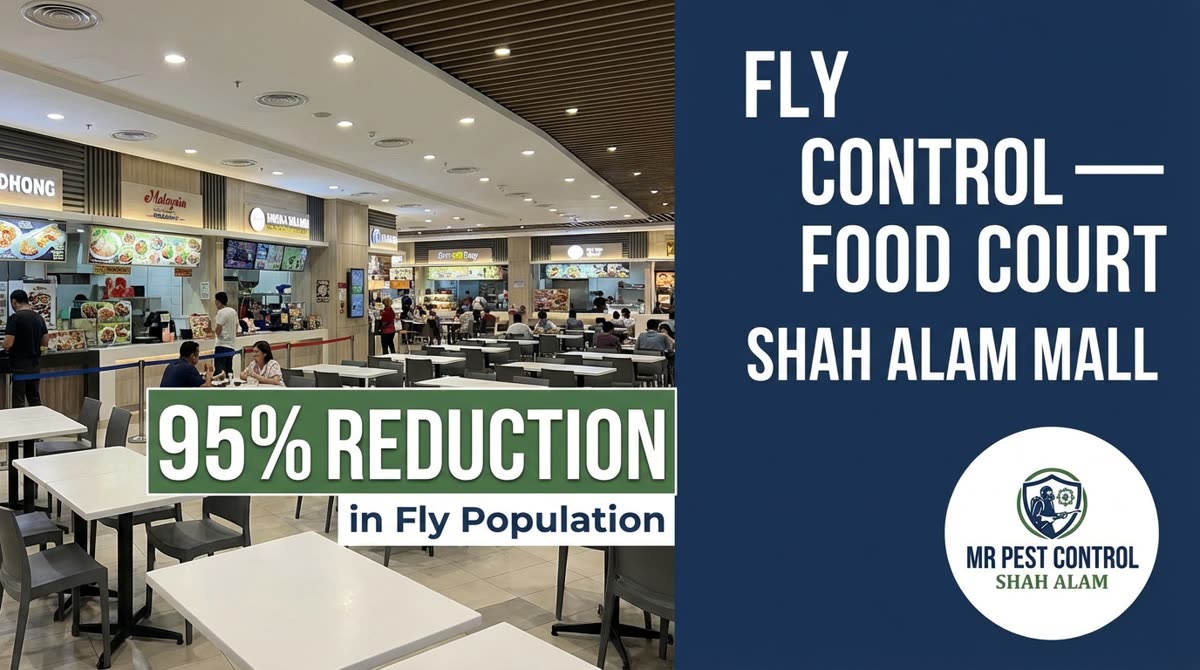
The management of a popular mall food court in Shah Alam contacted Mr Pest Control Shah Alam after receiving multiple complaints from diners about flies landing on food and tables. The food court houses 12 stalls serving a mix of Malay, Chinese, Indian, and Western cuisine — all operating from 10 AM to 10 PM daily.
Previous attempts by another pest control company had focused solely on space spraying with pyrethroid insecticide during off-hours. While this provided temporary relief for a day or two, fly populations bounced back quickly because the breeding sources were never addressed.
The mall management needed a solution that would pass monthly health inspections by MBSA (Majlis Bandaraya Shah Alam) and keep fly counts consistently low without disrupting daily food court operations.
Our Assessment
Our team conducted a detailed inspection during peak operating hours to understand fly activity patterns. We identified three key issues:
- Grease trap neglect: The shared grease traps behind the stalls had not been cleaned in over 3 weeks. Organic buildup was providing an ideal breeding ground for drain flies and house flies.
- Waste management gaps: Several stalls were using open-top bins. Food waste was accumulating near the back loading area, attracting blow flies from outside.
- No physical barriers: The food court's service entrance from the loading bay had no air curtain or strip curtain, allowing flies direct access from the waste area.
Our Solution: Integrated Fly Management
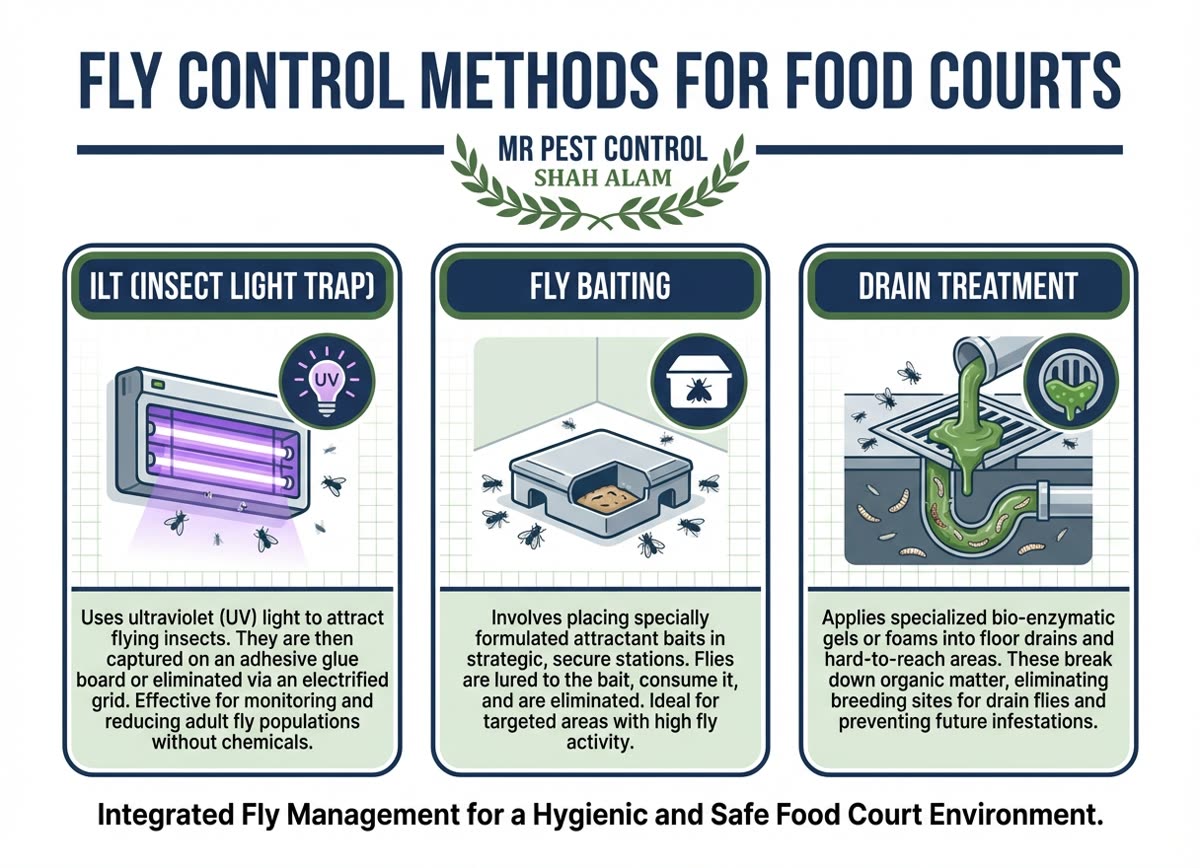
We implemented a four-part strategy designed for a food-safe environment where chemical spraying must be minimised:
1. Insect Light Traps (ILTs)
We installed 6 commercial-grade ILTs with UV-A tubes and glue boards at strategic locations — near stall entrances, above the dining perimeter, and near the service corridor. ILTs work 24/7, attracting flying insects with UV light and trapping them on adhesive boards. Unlike electric zappers, glue-board ILTs do not scatter insect fragments into the air — critical in a food environment.
2. Drain Treatment Programme
We treated all floor drains and grease traps with a biological drain gel containing beneficial bacteria that break down organic matter. This eliminates the breeding substrate for drain flies. We also recommended — and the management agreed to — a proper weekly grease trap cleaning schedule with a licensed waste contractor.
3. Fly Baiting
We placed granular fly bait stations in the back-of-house area and near the loading bay. These contain a fly attractant combined with a fast-acting insecticide. The bait stations are tamper-resistant and placed out of public view, drawing flies away from the dining area.
4. Exclusion and Sanitation Recommendations
- Installed PVC strip curtains at the service entrance from the loading bay
- Replaced open-top waste bins with foot-pedal lidded bins for all 12 stalls
- Conducted a 30-minute sanitation briefing for stall operators covering waste handling, drain maintenance, and food storage best practices
- Established a waste collection schedule — twice daily instead of once — during peak periods
Results
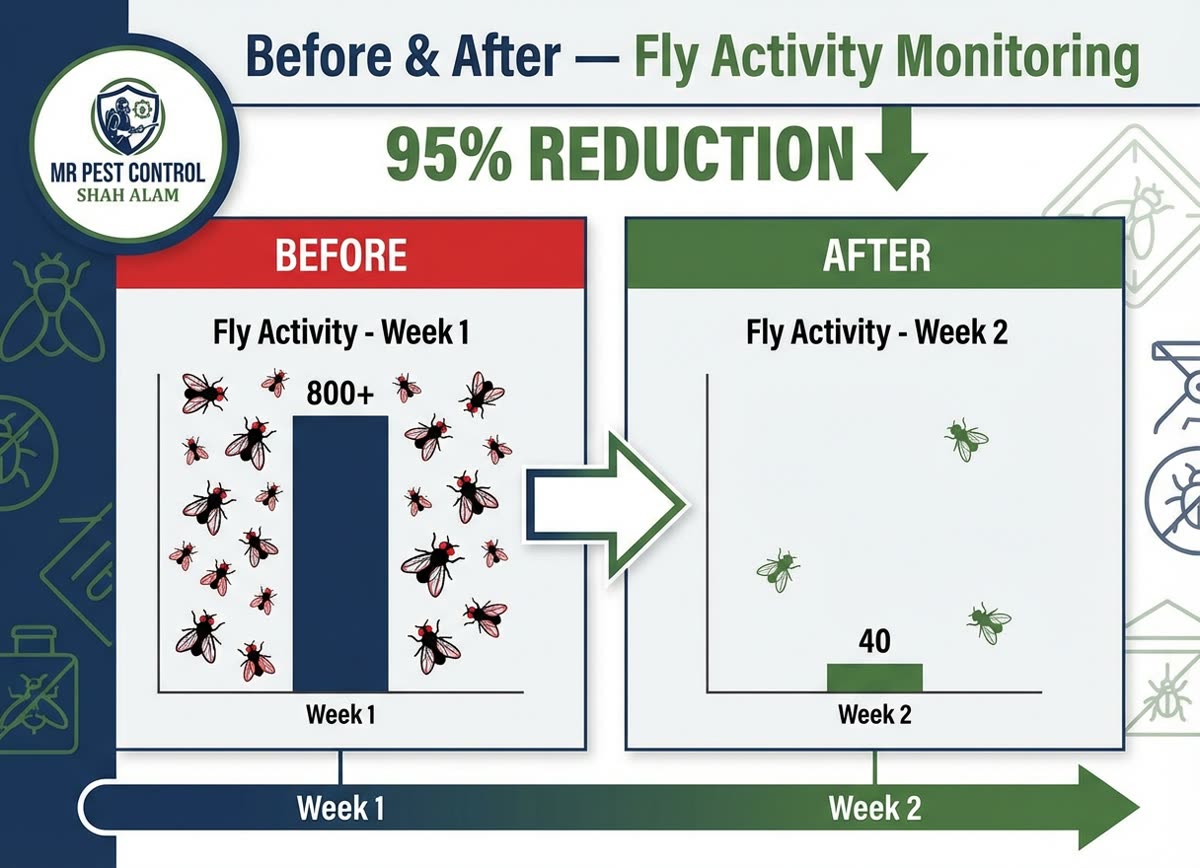
Within the first week, ILT glue board counts showed a 70% reduction in trapped flies compared to the baseline count taken during our initial assessment. By the end of week two, the food court achieved a 95% reduction in visible fly activity.
The mall passed its next MBSA health inspection with zero fly-related findings. Monthly monitoring visits ensure ILT glue boards are replaced, drains are checked, and any new breeding sites are addressed before they become a problem.
Why This Approach Works for Food Courts
Food courts are uniquely challenging because they combine multiple food preparation areas, high foot traffic, extended operating hours, and shared waste infrastructure. A spray-only approach fails because:
- Chemical residue near food preparation is a health risk and regulatory violation
- Spraying kills adult flies but does not address larvae in drains and grease traps
- Flies develop resistance to commonly used pyrethroids within a few generations
Integrated pest management — combining physical controls (ILTs, exclusion), biological controls (drain treatment), chemical controls (targeted baiting), and sanitation — delivers lasting results. This is the approach we use for all commercial fly control projects across Shah Alam.
📚 Sources & References
- Food Act 1983 (Malaysia) — Hygiene Standards for Food Premises
- Malaysian Pest Management Association (MPMA) — Commercial Pest Control Guidelines
- WHO — Integrated Vector Management Framework
- MBSA — Food Premises Licensing and Inspection Requirements
- Mr Pest Control Shah Alam — 8 Years of Commercial Pest Control Experience
 Mr Pest Control Shah Alam