💡 Key Takeaways
- ULV thermal fogging kills adult mosquitoes on contact within a 100-metre radius
- Larvicide treatment in drains and stagnant water prevents new mosquitoes from hatching for 4-6 weeks
- Fogging alone is temporary — combining it with larvicide gives lasting protection
- Taman Sri Muda's flood-prone terrain creates ideal mosquito breeding conditions
- Residents should eliminate standing water around their homes for best results
Project Overview
Taman Sri Muda is one of Shah Alam's most densely populated residential areas — and one of the most vulnerable to dengue outbreaks. The neighbourhood's low-lying terrain, combined with frequent flash flooding, creates persistent standing water that serves as prime mosquito breeding habitat.
A local residents' association contacted Mr Pest Control Shah Alam after multiple dengue cases were reported in the area. Our team carried out a comprehensive mosquito control operation covering approximately 200 terrace houses and surrounding common areas.
The Problem
Taman Sri Muda faces a unique combination of factors that make mosquito control particularly challenging:
- Flood-prone terrain: The area experienced major flooding in recent years, and residual standing water collects in drains, abandoned lots, and low-lying gardens
- Dense housing: Tightly packed terrace houses with shared drains mean mosquito populations spread rapidly between properties
- Open drains: Many of the neighbourhood's monsoon drains hold stagnant water year-round
- Active dengue cases: Several confirmed dengue cases in the preceding month raised urgency
Our Approach
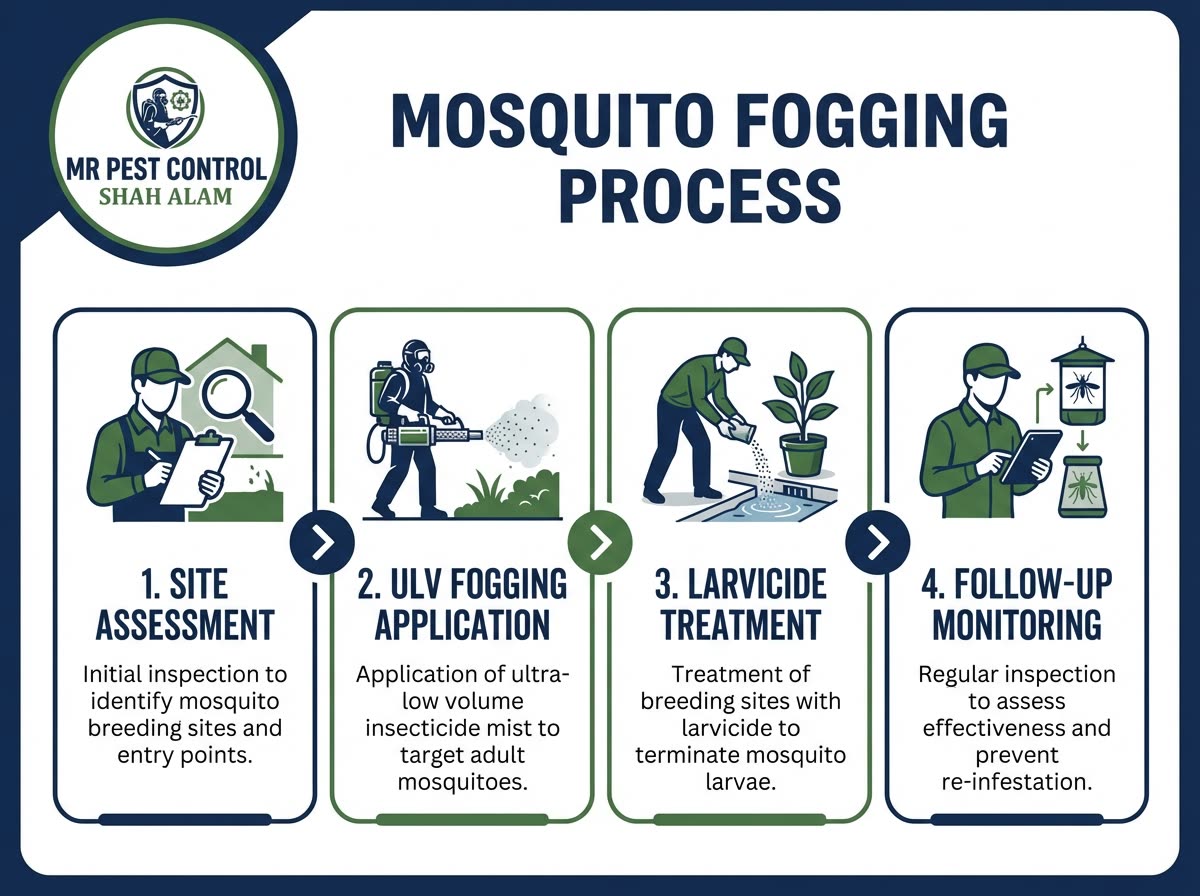
We deployed a two-pronged strategy: immediate adult mosquito knockdown via ULV thermal fogging, followed by larvicide treatment for long-term prevention.
Phase 1: ULV Thermal Fogging
Our team conducted fogging at dawn (6:00–7:30 AM) when Aedes mosquitoes are most active. We used a vehicle-mounted ULV (Ultra-Low Volume) fogger that disperses insecticide in microscopic droplets — small enough to remain suspended in the air and reach mosquitoes in hidden spots.
The fogging covered:
- All residential streets and back lanes
- Common garden areas and playgrounds
- Drain corridors and culvert entrances
- Perimeter of the nearby school and commercial lots
We used a water-based pyrethroid formulation that is effective against Aedes mosquitoes while being safe for residents, pets, and plants at the applied concentration.
Phase 2: Larvicide Treatment
Fogging kills adult mosquitoes but doesn't address larvae already developing in water. Within the same operation, our team applied granular larvicide (Bacillus thuringiensis israelensis — BTI) to:
- Open monsoon drains along every street
- Stagnant water pools in vacant lots
- Roof gutters accessible from ground level
- Container water (tyres, flower pots, discarded containers) found during the walkthrough
BTI is a biological larvicide — it targets only mosquito larvae and is safe for fish, animals, and humans. It provides 4–6 weeks of ongoing protection.
Resident Advisory
Before the operation, we distributed advisory notices to all affected households covering:
- Fogging schedule and safety precautions (close windows, bring pets indoors)
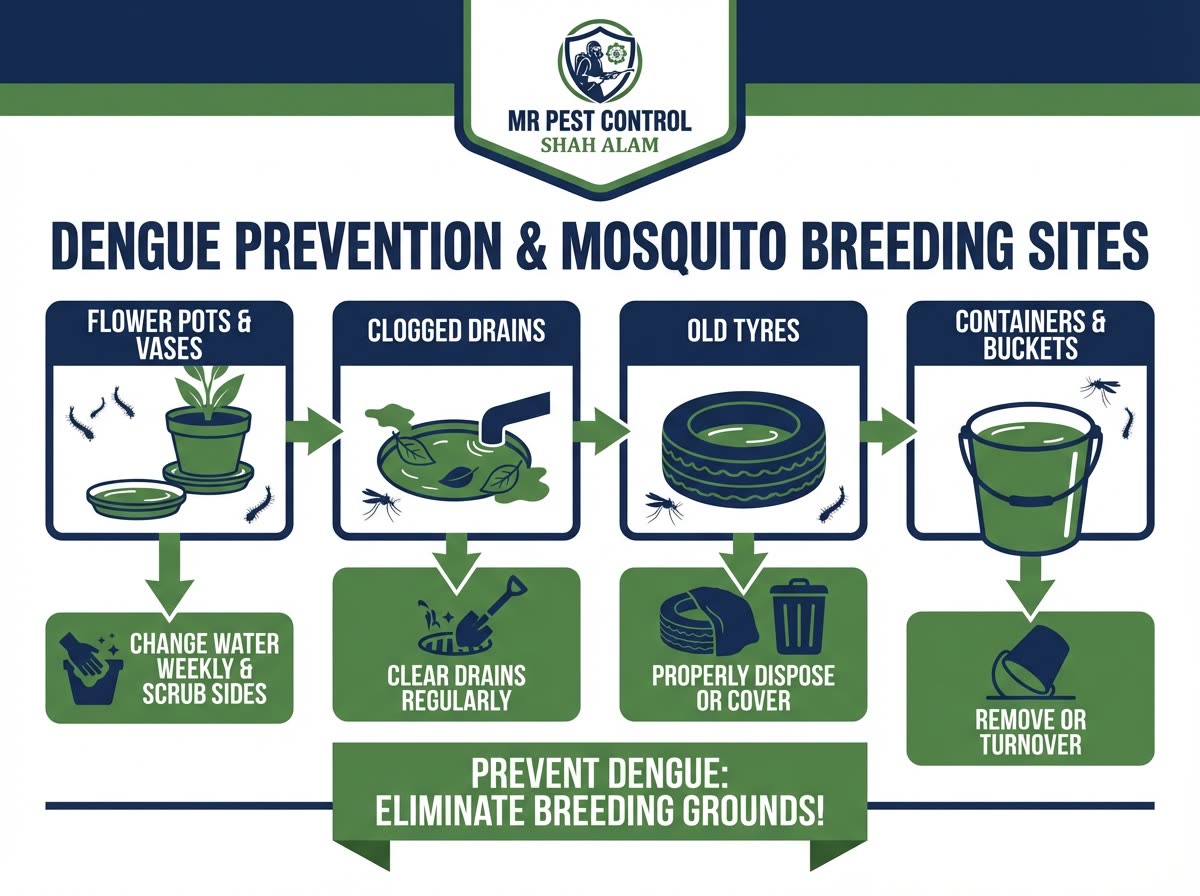
- How to eliminate breeding sites around their homes
- Signs of dengue fever and when to seek medical attention
Results
Post-treatment monitoring showed:
- Immediate knockdown: Visible reduction of adult mosquito activity within hours of fogging
- Larval count reduction: Over 90% reduction in mosquito larvae in treated drains at 1-week follow-up
- No new dengue cases: Zero new confirmed cases in the treatment area during the 4-week follow-up period
- Resident satisfaction: Positive feedback from the residents' association, with a follow-up fogging scheduled
Why Regular Fogging Matters
A single fogging session provides immediate relief, but mosquito populations recover within 2–4 weeks as new adults emerge from untreated breeding sites. For areas like Taman Sri Muda with persistent standing water, we recommend:
- Fogging every 2–3 weeks during peak dengue season (typically October–February)
- Monthly larvicide treatment year-round
- Community-wide "gotong-royong" cleanup drives to eliminate breeding sites
- Individual household vigilance — checking flower pots, roof gutters, and air conditioner trays weekly
📚 Sources & References
- Ministry of Health Malaysia — Dengue Situation Updates 2026
- World Health Organization — Dengue and Severe Dengue Fact Sheet
- Malaysian Pest Management Association (MPMA) — Fogging Standards
- Mr Pest Control Shah Alam — 8 Years of Field Experience (Est. 2018)
 Mr Pest Control Shah Alam