💡 Key Takeaways
- 12 hotel rooms were affected by bed bugs, with the infestation spreading through shared laundry and housekeeping
- Our team used a combination of residual spraying, crack-and-crevice treatment, and steam treatment
- All 12 rooms were confirmed bed-bug-free within 6 weeks after 3 treatment cycles
- Zero guest complaints were received after treatment completion
- A preventive monitoring programme was implemented to ensure long-term protection
Project Overview
In late 2025, a budget hotel in Seksyen 7, Shah Alam contacted us after receiving multiple guest complaints about bed bug bites. The hotel management had attempted DIY treatment with over-the-counter sprays, but the problem had worsened over several weeks. By the time they called Mr Pest Control Shah Alam, the infestation had spread from 3 rooms to 12.
This case study documents our approach to eliminating the infestation while minimising disruption to hotel operations.
Client Profile
- Property type: Budget hotel, 40 rooms across 3 floors
- Location: Seksyen 7, Shah Alam
- Problem: Bed bug infestation in 12 rooms (30% of total rooms)
- Duration of problem: Approximately 8 weeks before contacting us
- Previous treatment: DIY spraying with retail insecticide (ineffective)
Initial Inspection Findings
Our team conducted a comprehensive inspection of all 40 rooms over one day. Here is what we found:
Severity Assessment
12 rooms confirmed infested — ranging from light (a few live bugs) to heavy (established colonies with eggs, nymphs, and adults). The worst-affected rooms were on the second floor, where the infestation had originated.
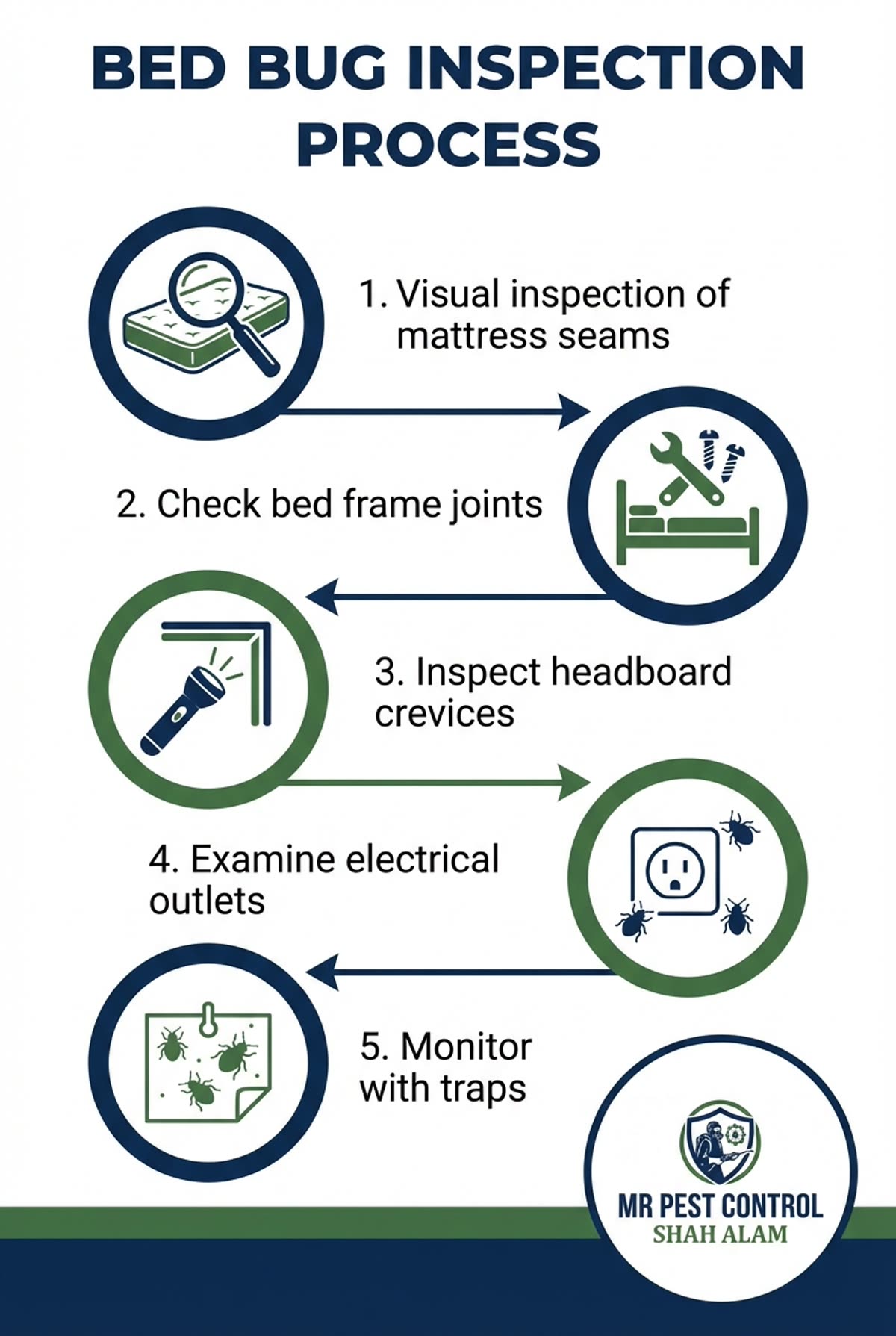
During inspection, we identified bed bugs in the following locations:
- Mattress seams and piping — the primary harbourage in all affected rooms
- Bed frame joints and headboard crevices — particularly in timber bed frames
- Bedside table drawers — dark, undisturbed areas where bugs hide during the day
- Wall-mounted picture frames — a commonly overlooked hiding spot
- Curtain folds and hems near the beds
- Electrical outlet plates — bugs were nesting behind wall plates adjacent to beds
Root Cause Analysis
We identified two key factors that allowed the infestation to spread so quickly:
- Shared laundry handling — bed linens from infested and clean rooms were transported in the same trolleys and processed together, spreading bugs and eggs to clean rooms
- DIY spray treatment — the retail insecticide used by housekeeping staff caused bed bugs to scatter and disperse into adjacent rooms through wall voids and pipe penetrations, actually accelerating the spread
Treatment Plan
Based on our inspection findings, we designed a three-phase treatment programme:
Phase 1: Initial Treatment (Days 1–2)
We treated all 12 confirmed rooms plus 6 adjacent rooms as a precaution. The treatment involved:
- Residual insecticide application — professional-grade pyrethroid applied to all bed frames, headboards, furniture joints, and perimeter baseboards
- Crack-and-crevice treatment — targeted application into wall voids, electrical outlets, and furniture joints using specialised injection equipment
- Steam treatment — high-temperature steam (above 60°C) applied to mattresses, upholstery, and curtains to kill all life stages on contact including eggs
- Mattress encasements — we recommended and the hotel installed bed-bug-proof encasements on all mattresses in treated rooms, trapping any remaining bugs inside
Phase 2: Follow-Up Treatment (Week 2)
Two weeks after the initial treatment, we returned for a second round. This timing is critical because bed bug eggs take 7–10 days to hatch, and the second treatment targets any newly emerged nymphs before they can mature and reproduce.
During this visit, we also inspected all 40 rooms again. No new infestations were detected in previously unaffected rooms — confirming our containment strategy was effective.
Phase 3: Verification Treatment (Week 4–6)
A third treatment round was conducted at week 4 as a precautionary measure. At week 6, we performed a final comprehensive inspection of all treated rooms using monitoring traps that had been placed during Phase 1.
Results
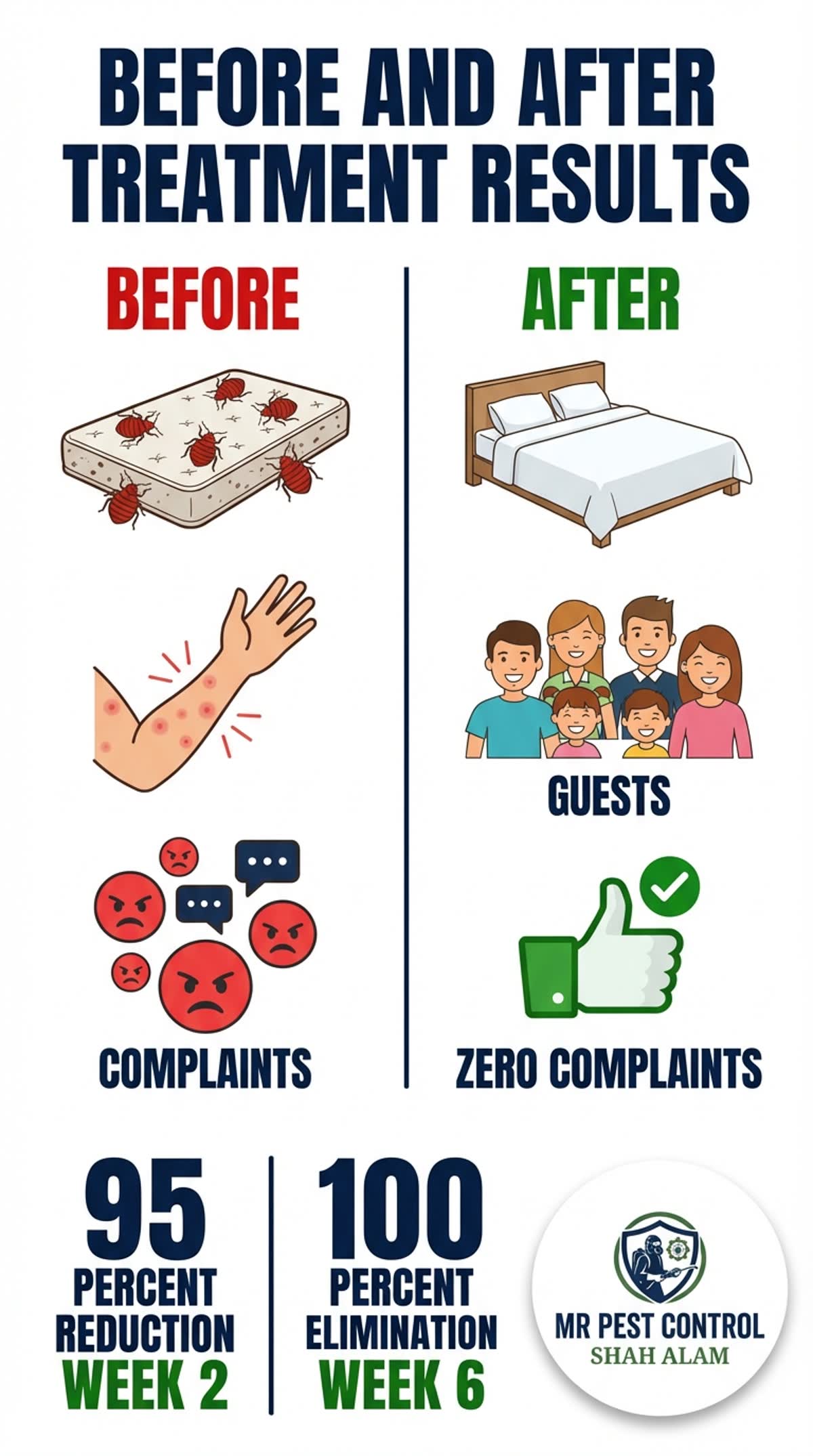
The treatment programme achieved complete eradication:
- Week 2 inspection: Live bug count reduced by 95% across all rooms
- Week 4 inspection: Zero live bugs detected in 10 of 12 rooms; 2 rooms showed minimal residual activity
- Week 6 final inspection: Zero live bugs, zero fresh evidence (no new faecal spots, no shed skins) in all 12 rooms — infestation confirmed eliminated
- Guest complaints: Zero bed-bug-related complaints received after treatment completion
Operational Impact
We worked closely with the hotel management to minimise business disruption:
- Treatments were scheduled during low-occupancy weekday mornings
- Rooms were treated in rotation — 6 rooms per treatment session — so the hotel never had to close more than 15% of its inventory at once
- Rooms were ready for occupancy within 6 hours of treatment
- Total hotel revenue loss was estimated at less than RM2,000 across the entire treatment period
Preventive Measures Implemented
To prevent recurrence, we helped the hotel implement the following protocols:
- Laundry segregation — separate trolleys and bags for each floor, with all linens washed at 60°C minimum
- Housekeeping training — staff trained to identify early signs of bed bugs during room turnover (faecal spots, shed skins, live bugs)
- Monthly monitoring — passive monitoring traps installed under beds in all 40 rooms, checked monthly by our team
- Quarterly preventive treatment — light residual application to high-risk areas (bed frames, headboards) every 3 months
- Guest reporting protocol — streamlined process for front desk to escalate any guest complaints within 24 hours
Why DIY Bed Bug Treatment Fails in Hotels
This case illustrates a pattern we see frequently across commercial properties in Shah Alam. DIY bed bug treatment fails for several reasons:
- Retail sprays cause dispersal — bed bugs detect repellent chemicals and scatter to new areas, spreading the infestation faster
- Eggs are resistant — most retail products do not kill eggs, meaning the infestation rebounds within 2 weeks
- Hidden harbourages are missed — without professional inspection techniques, bugs in wall voids, electrical outlets, and furniture joints go untreated
- No follow-up protocol — bed bug elimination requires 2–3 treatment cycles timed to the insect's life cycle
Project Timeline Summary
- Day 0: Initial contact and site visit
- Day 1: Comprehensive 40-room inspection
- Days 2–3: Phase 1 treatment (12 infested + 6 adjacent rooms)
- Week 2: Phase 2 follow-up treatment and full re-inspection
- Week 4: Phase 3 precautionary treatment
- Week 6: Final verification inspection — all clear
- Ongoing: Monthly monitoring and quarterly preventive treatments
📚 Sources & References
- Malaysian Pest Management Association (MPMA) — Bed Bug Treatment Guidelines
- National Environment Agency — Best Practices for Bed Bug Management
- World Health Organization — Bed Bugs: Public Health Significance
- Mr Pest Control Shah Alam — 8 Years of Field Experience (Est. 2018)
 Mr Pest Control Shah Alam