
💡 Key Takeaways
- Aedes mosquitoes breed in clean, stagnant water — even a bottle cap's worth is enough
- Shah Alam's monsoon seasons (Nov–Jan, May–Jul) are peak dengue periods
- Weekly "search and destroy" of standing water is the most effective prevention
- Dengue fever symptoms appear 4–10 days after a bite — seek medical help if you have high fever with body aches
- Professional mosquito fogging and larviciding provide community-level protection
Why Dengue Is a Serious Concern in Shah Alam
Dengue fever remains one of Malaysia's most persistent public health threats. Selangor consistently records the highest number of dengue cases nationwide, and Shah Alam — as the state capital — is no exception. The combination of tropical climate, urban development, and dense residential areas creates ideal conditions for Aedes aegypti and Aedes albopictus mosquitoes to thrive.
In 2025 alone, Malaysia recorded over 120,000 dengue cases. Many of these were concentrated in Selangor's residential areas, including neighbourhoods across Shah Alam such as Seksyen 7, Seksyen 13, Taman Sri Muda, and Kota Kemuning. The reality is that dengue prevention starts at home — and every Shah Alam resident has a role to play.
At Mr Pest Control Shah Alam, we have been helping households and businesses across Shah Alam fight mosquito infestations since 2018. This guide shares everything we have learned about keeping dengue at bay.
Understanding the Aedes Mosquito
Before we dive into prevention tips, it helps to understand your enemy. The Aedes mosquito has distinct characteristics that make it different from other mosquitoes — and these differences matter for effective prevention.
Aedes Mosquito Behaviour
Unlike common mosquitoes that bite at night, Aedes mosquitoes are daytime biters. They are most active during early morning (around 7–9 AM) and late afternoon (4–6 PM). This means traditional mosquito coils at bedtime are not enough to protect against dengue.
Aedes mosquitoes are also indoor mosquitoes. They prefer to rest in dark, cool areas inside your home — behind curtains, under furniture, inside wardrobes, and in storage rooms. They do not fly far from their breeding site, typically staying within 200 metres. This means if you have Aedes mosquitoes in your home, the breeding source is very likely on your property or your immediate neighbour's.
Where Aedes Mosquitoes Breed
Here is a critical fact: Aedes mosquitoes breed exclusively in clean, stagnant water. They do not breed in drains, rivers, or muddy puddles. They lay their eggs on the walls of containers just above the water line, and these eggs can survive dry conditions for months — hatching only when water covers them again.
Top 10 Dengue Prevention Tips for Shah Alam Homes
1. Do a Weekly "Search and Destroy"
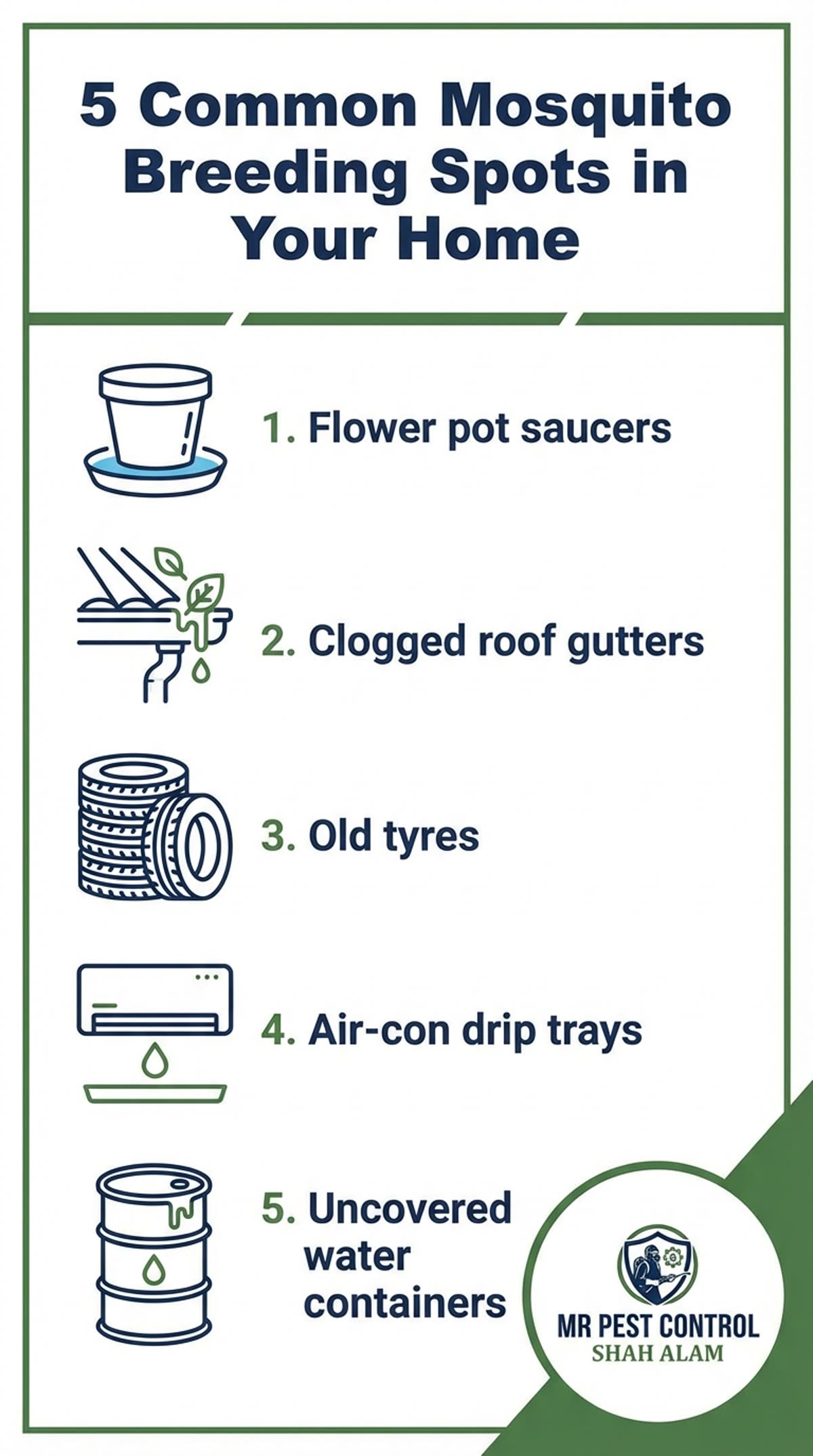
The single most effective dengue prevention method is eliminating breeding sites. Every week, walk around your property and check for any container holding stagnant water. This includes:
- Flower pot saucers — the number one breeding ground we find during inspections
- Pails and buckets left outdoors
- Clogged roof gutters — especially common in terrace houses across Setia Alam and Bukit Jelutong
- Air-conditioner drip trays — check all outdoor units
- Tyres, containers, and debris in your garden or car porch
Empty, scrub, and dry all containers. For items that must hold water (like vases), change the water completely every 5 days and scrub the inner walls to dislodge any eggs.
2. Cover All Water Storage Containers
Many Shah Alam households keep water storage tanks, especially those in areas that occasionally experience water disruption. Ensure all tanks, barrels, and drums are tightly covered with mosquito-proof lids. Even small gaps allow mosquitoes entry.
For decorative water features and fish ponds, stock them with mosquito-eating fish like guppies (Poecilia reticulata), which consume mosquito larvae effectively.
3. Maintain Your Roof Gutters
Blocked gutters are a hidden dengue risk. Leaves, debris, and sediment accumulate and trap rainwater, creating perfect Aedes breeding pools out of sight. In Shah Alam's terrace house neighbourhoods, we regularly find heavily infested gutters during inspections.
Clean your gutters at least once every two months, or more frequently during the monsoon season. Consider installing gutter guards to prevent leaf accumulation.
4. Use Mosquito Screens on Windows and Doors
Installing mesh screens on all windows and doors is one of the most effective long-term investments against mosquitoes. Choose screens with a mesh size of 1.2mm or smaller, which blocks even the smallest Aedes mosquitoes.
This is particularly important for ground-floor units and homes near construction sites or empty lots, which tend to have higher mosquito populations.
5. Apply Larvicide to Standing Water You Cannot Remove
Some water features cannot be emptied — roof gutters in hard-to-reach areas, water tanks, and ornamental ponds. For these, use temephos sand granules (commonly known as "abate") available from local hardware stores. One teaspoon treats approximately 10 litres of water and remains effective for up to 3 months.
For larger properties and commercial premises, our professional larviciding service provides systematic treatment of all potential breeding sites.
6. Wear Protective Clothing During Peak Hours
During the early morning and late afternoon when Aedes mosquitoes are most active, wear long sleeves and long pants if you are outdoors. Light-coloured clothing is less attractive to mosquitoes than dark colours.
7. Use Mosquito Repellent Correctly
Apply repellent containing DEET (20–30%), picaridin, or oil of lemon eucalyptus to exposed skin. Reapply every 4–6 hours when outdoors. For children, use formulations with 10–15% DEET and avoid applying to their hands (which they may put in their mouth).
8. Keep Your Garden Trimmed and Tidy
Overgrown vegetation provides resting areas for adult mosquitoes. Keep grass short, trim bushes, and remove unnecessary plants that create shaded, humid pockets. This is especially important in landed properties across Kota Kemuning, Alam Impian, and Denai Alam where gardens are larger.
9. Coordinate With Your Neighbours
Dengue prevention is a community effort. A single neglected property with breeding sites can affect the entire neighbourhood. Join or organise gotong-royong cleanup activities. Report abandoned properties with potential breeding grounds to MBSA (Shah Alam City Council).
In terrace house communities, Aedes mosquitoes easily travel between adjacent units. Your prevention efforts are only as strong as your neighbourhood's collective action.
10. Schedule Professional Mosquito Control
For comprehensive protection, professional mosquito fogging and larviciding treatments target both adult mosquitoes and larvae simultaneously. This is especially recommended for:
- Properties near construction sites or vacant lots
- Homes in dengue hotspot areas
- Before and during outdoor events (weddings, parties)
- Commercial properties and food establishments
- Schools, kindergartens, and community centres
Recognising Dengue Symptoms
Dengue symptoms typically appear 4 to 10 days after being bitten by an infected Aedes mosquito. Early recognition is critical — dengue can progress rapidly from mild to severe.
Common Dengue Symptoms
- Sudden high fever (39–40°C) lasting 2–7 days
- Severe headache, especially behind the eyes
- Muscle and joint pain — dengue is nicknamed "breakbone fever"
- Nausea and vomiting
- Skin rash appearing 2–5 days after fever onset
- Fatigue and weakness
When to Seek Immediate Medical Help
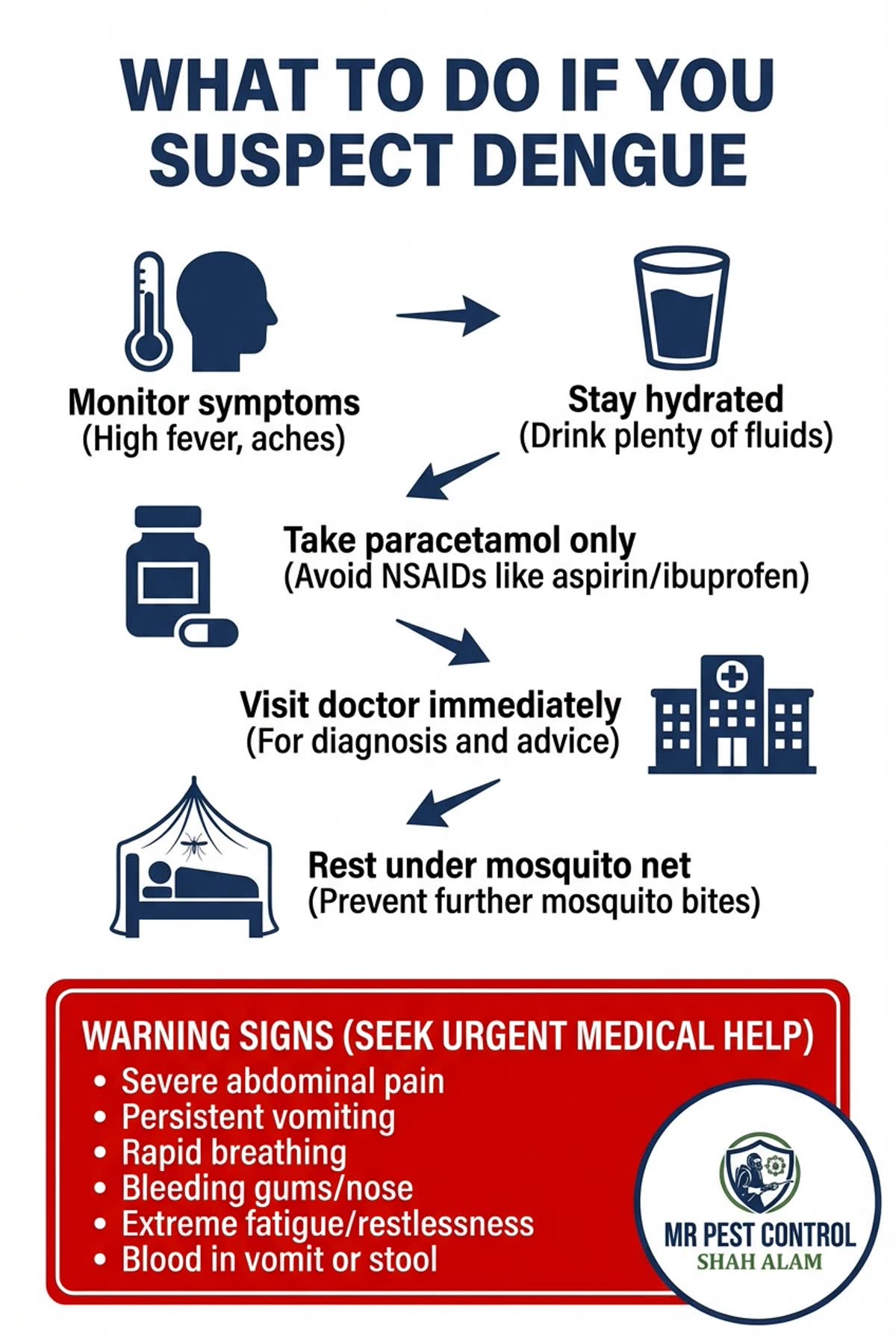
Go to the nearest hospital emergency department if you experience:
- Severe abdominal pain
- Persistent vomiting (3 or more times in 24 hours)
- Bleeding gums, nosebleeds, or blood in stool/urine
- Difficulty breathing
- Extreme fatigue or restlessness
- Cold, clammy skin or rapid pulse
These are warning signs of severe dengue (dengue haemorrhagic fever), which can be life-threatening without proper medical treatment. Shah Alam General Hospital and nearby private hospitals in Seksyen 13 and i-City are equipped to handle dengue cases.
What to Do While Recovering
- Rest and drink plenty of fluids (water, oral rehydration salts, isotonic drinks)
- Take paracetamol for fever — never take aspirin or ibuprofen as they increase bleeding risk
- Monitor your platelet count with daily blood tests as advised by your doctor
- Use mosquito nets while resting to prevent infecting other mosquitoes (which can then spread dengue to others)
- Continue monitoring for warning signs even after fever subsides — the critical period is often days 3–7
Shah Alam's Dengue Hotspots
Based on our experience servicing properties across Shah Alam, certain areas consistently have higher mosquito activity due to environmental factors:
- Taman Sri Muda — flood-prone area with standing water issues after heavy rain
- Seksyen 7 and Seksyen 13 — older residential areas with mature trees and aging drainage
- Areas near construction sites — across Setia Alam, i-City, and Eco Ardence where standing water in construction debris is common
- High-density condominiums — shared common areas with water features and poorly maintained drains
If you live in these areas, extra vigilance and regular professional mosquito treatments are strongly recommended.
How Professional Mosquito Control Works
At Mr Pest Control Shah Alam, our mosquito management approach combines three methods for maximum effectiveness:
- Thermal fogging — creates a dense fog that kills adult mosquitoes on contact, covering large areas including hidden resting spots
- Larviciding — applying larvicide to all identified and potential breeding sites to prevent new mosquitoes from developing
- Residual spraying — applying long-lasting insecticide to walls, vegetation, and surfaces where mosquitoes rest, providing protection for 4–6 weeks
We recommend monthly treatments during peak dengue season and quarterly treatments during off-peak periods. All products we use are approved by the Ministry of Health Malaysia and are safe for households with children and pets when applied correctly.
📚 Sources & References
- Ministry of Health Malaysia — iDengue Portal & Guidelines
- World Health Organization — Dengue and Severe Dengue Fact Sheet
- Malaysian Medical Association — Dengue Management Guidelines
- Mr Pest Control Shah Alam — 8 Years of Field Experience (Est. 2018)
 Mr Pest Control Shah Alam