
💡 Key Takeaways
- Mud tubes on walls are the #1 sign of subterranean termites
- Hollow-sounding timber means damage is already happening inside
- Discarded wings near lights indicate an active colony nearby
- Never spray insecticide on termites — it scatters them and worsens the problem
- Annual professional inspections can save thousands in repair costs
How to Know If Your House Has Termites
Termites are the number one property threat in Malaysia. They work silently, eating through timber structures for months — sometimes years — before homeowners notice. By the time visible damage appears, the colony may have already caused tens of thousands of ringgit in structural harm.
The good news is that termites leave clues. If you know what to look for, you can catch an infestation early and save yourself a massive repair bill.
1. Mud Tubes on Walls and Foundations
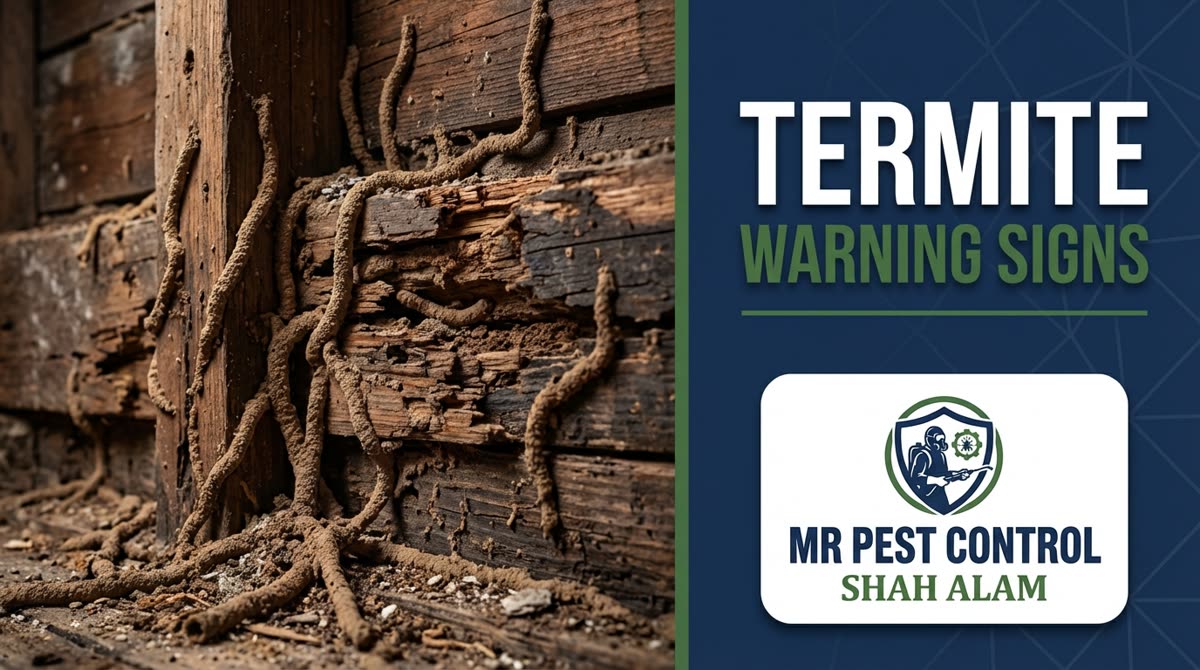
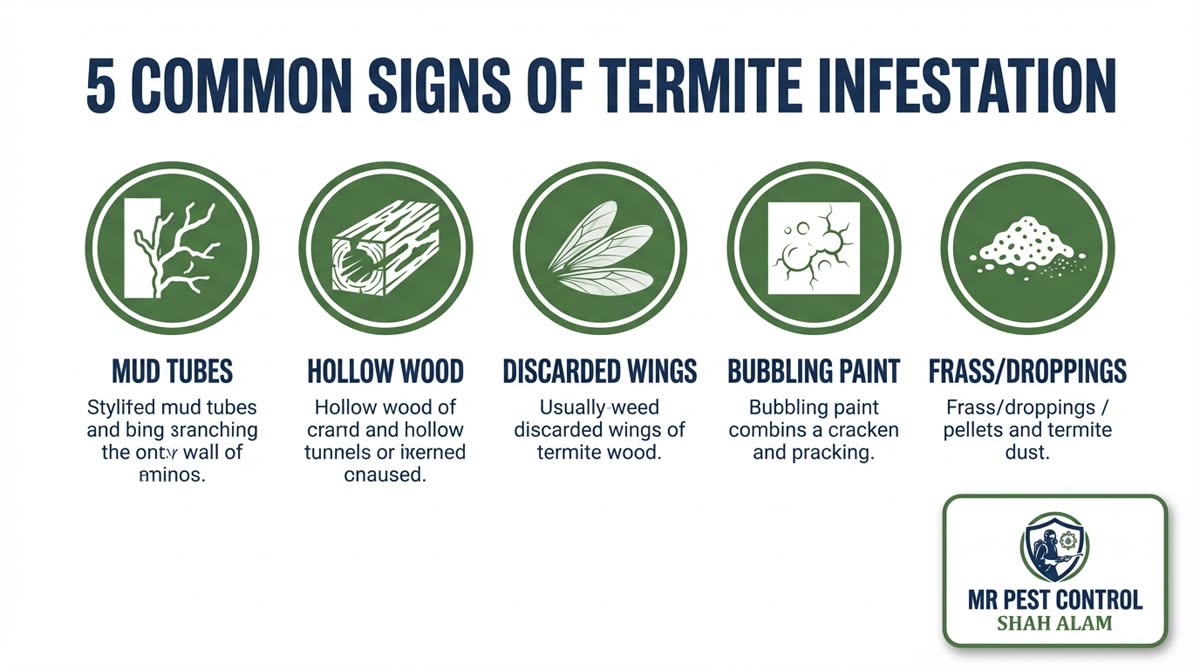
Subterranean termites — the most common and destructive species in Shah Alam — build mud tubes to travel from their underground colony to the timber in your home. These pencil-thin, brownish tubes typically run along exterior walls, interior wall corners, foundations, and ceiling beams.
Check along the base of your walls, especially where the wall meets the floor. Look behind furniture, inside cabinets under the sink, and along your home's external foundation. In terrace houses across Kota Kemuning and Setia Alam, we commonly find mud tubes running up party walls shared between units — meaning your neighbour's termite problem can quickly become yours.
If you see mud tubes, do not break them. A professional technician can use active tubes to trace the colony's path and plan more effective treatment.
2. Hollow-Sounding Timber
Walk around your house and tap on timber surfaces — door frames, window frames, skirting boards, staircase railings, and built-in cabinets. If they sound hollow or papery instead of solid, termites may have eaten the inside.
Termites eat wood from the inside out, leaving a thin shell on the surface that looks perfectly normal. This is why many homeowners are shocked when a door frame suddenly crumbles — the damage was happening invisibly for months.
Pay special attention to areas near bathrooms and kitchens where moisture levels are higher. Termites prefer slightly damp timber, and leaking pipes attract them to specific areas.
3. Discarded Wings Near Windows and Lights
Termite swarmers — the reproductive members of the colony — have wings. They emerge in large numbers, usually after heavy rain in the evening, and fly towards light sources. After landing, they shed their wings and pair off to start new colonies.
If you find small, translucent wings scattered near windows, light fixtures, or on the floor near your front door, a termite colony is nearby and actively expanding. In Shah Alam, termite swarming season typically peaks between March and May, coinciding with the monsoon transition.
4. Tight-Fitting Doors and Windows
If your doors or windows suddenly become difficult to open or close — and you have not had recent renovation work — termites could be the cause. Termite damage causes timber frames to warp. This is particularly common in older terrace houses where timber door frames have been in place for 15 to 20 years without inspection.
5. Bubbling or Peeling Paint
Moisture from termite activity underneath painted surfaces can cause paint to bubble, peel, or crack. This is especially noticeable on walls near timber structures — door frames, window architraves, and skirting boards.
6. Sagging Floors or Ceilings
In severe infestations, termites compromise structural integrity of timber floor joists and ceiling beams. If you notice spongy floors or sagging ceilings, get a professional inspection immediately. This is more common in older properties with timber roof trusses.
7. Frass (Drywood Termite Droppings)
Drywood termites push their droppings out of tiny holes in the wood. Frass looks like small, oval-shaped pellets — similar to fine sawdust. If you find small piles of wood-coloured granules near furniture or beneath roof beams, drywood termites may be present.
8. Damaged or Crumbling Timber
If you can push a screwdriver into a timber door frame easily, the damage is already advanced. The structural integrity is severely compromised and will need replacement along with termite treatment.

What to Do If You Spot These Signs
- Do not disturb the termites. Avoid spraying insecticide or poking at mud tubes — this causes termites to scatter and establish new feeding routes.
- Document what you see. Take photos of any mud tubes, damaged timber, or wings.
- Contact a professional. The team at Mr Pest Control Shah Alam can inspect your entire property including the roof void and wall cavities.
- Get a written assessment. A proper inspection results in a documented report with photos, species identification, and treatment recommendations.
Prevention Tips
- Fix water leaks promptly — leaking taps and gutters create damp conditions termites love
- Keep timber away from direct soil contact
- Maintain good ventilation in enclosed spaces
- Remove dead trees, stumps, and scrap timber from your garden
- Schedule annual termite inspections even if you have not seen signs
- If renovating, ask about pre-renovation termite treatment
📚 Sources & References
- Malaysian Pest Management Association (MPMA) Guidelines
- Department of Agriculture Malaysia — Termite Control Standards
- World Health Organization — Vector Control Best Practices
- Mr Pest Control Shah Alam — 8 Years of Field Experience (Est. 2018)
 Mr Pest Control Shah Alam