
💡 Key Takeaways
- Restaurants and food premises should have pest control at least once a month
- Offices and retail spaces typically require quarterly or bi-monthly treatments
- Warehouses and logistics facilities need monthly to bi-monthly programmes
- Regular pest control is a legal requirement for licensed food businesses in Malaysia
- A scheduled maintenance contract is more cost-effective than reactive emergency callouts
Why Pest Control Frequency Matters for Commercial Properties
For residential homeowners, pest control is often reactive — you call a specialist when you see a problem. For commercial premises in Malaysia, that approach is not sufficient and, in many cases, not legally compliant. A single cockroach sighting in a restaurant kitchen, a rat spotted in a hotel corridor, or flies near a food production line can trigger a shutdown order from the local authority or the Ministry of Health.
The question most business owners ask us is simple: how often do we actually need pest control? The answer depends on your business type, the nature of your premises, and the level of risk you face. There is no single answer that fits all commercial properties, but there are clear guidelines for each category.
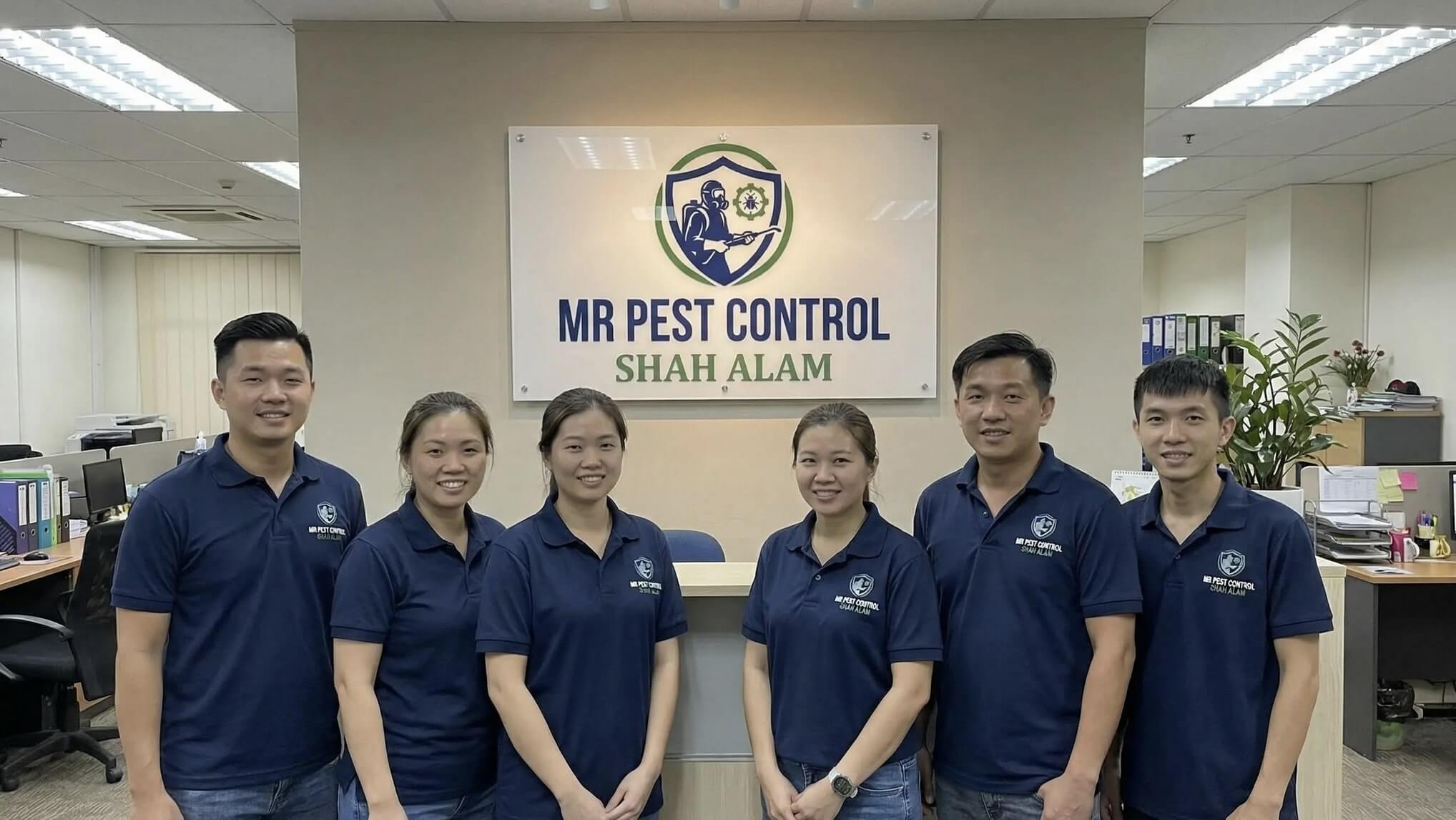
Mr Pest Control Shah Alam has been managing commercial pest control programmes for businesses across Shah Alam and Selangor since 2018. Here is our practical guide to recommended treatment frequencies by property type.

Recommended Frequency by Premises Type
Restaurants, Cafes, and Food Stalls — Monthly (Minimum)
Food and beverage premises carry the highest pest risk of any commercial property type. The combination of food waste, warm temperatures, moisture, and constant delivery of fresh produce creates ideal conditions for cockroaches, flies, and rats. A single infestation can result in a food safety violation, negative reviews, and lasting reputational damage.
Under the Malaysian Food Hygiene Regulations 2009, all licensed food premises are required to implement effective pest management programmes. While the regulations do not specify a precise frequency, industry best practice — and what MBSA and MOH inspectors expect to see — is monthly professional pest control at minimum. High-risk premises near wet markets or with outdoor seating may benefit from fortnightly service.
A typical monthly commercial programme for a restaurant in Shah Alam includes gel bait application for cockroaches, residual spraying of kitchen perimeters, fly trap monitoring, and a written service report that you can present during inspections.
Hotels, Serviced Apartments, and Guesthouses — Monthly
Hospitality properties face unique challenges. Guests arrive from many different locations, luggage can introduce bed bugs or cockroaches, and multiple kitchens or F&B outlets increase pest pressure significantly. Monthly pest control is standard for hotel properties, with additional treatments for specific areas (laundry, bin rooms, kitchen) as needed. Bed bug management programmes may run separately from general pest control.
Offices and Retail Spaces — Quarterly or Bi-Monthly
Lower-risk commercial environments such as office buildings, retail shops, and showrooms generally do not require monthly treatment unless there is an active infestation. A quarterly programme — four visits per year — is sufficient for maintaining a pest-free environment and satisfying building management requirements.
However, office pantries and break rooms should be inspected during each visit as these areas are more susceptible to cockroach activity. If your building has a shared food court or is located above a restaurant, upgrade to bi-monthly (every two months) to manage cross-contamination risk.
Warehouses, Factories, and Logistics Facilities — Monthly to Bi-Monthly
Storage facilities that handle food products, cardboard packaging, or raw materials need robust pest management. Rats are the primary concern — they can cause significant damage to goods, electrical wiring, and structural elements, and they are capable of contaminating entire pallets of stock. Cockroaches and birds are also common issues in large warehouse environments.
Monthly service is recommended for food-grade warehouses and cold storage facilities. Non-food warehouses can typically be maintained with bi-monthly visits, supplemented by bait station monitoring between treatment visits.

What a Good Commercial Pest Control Programme Includes
Integrated Pest Management (IPM)
Professional commercial pest control is not just about spraying chemicals on a schedule. A proper programme uses Integrated Pest Management (IPM) — a systematic approach that combines monitoring, prevention, and targeted treatment. IPM reduces chemical usage, minimises disruption to your business operations, and delivers more sustainable long-term results.
Our commercial IPM programme for Shah Alam businesses includes:
- Initial site survey and risk assessment
- Identification of pest entry points and harborage areas
- Installation and monitoring of bait stations and traps
- Targeted chemical treatments using approved formulations
- Written service report after every visit
- Recommendations for structural improvements and sanitation practices
Documentation for Regulatory Compliance
One of the most overlooked aspects of commercial pest control is documentation. When MBSA inspectors, MOH officers, or ISO/HACCP auditors visit your premises, they will ask for your pest control records. A reputable pest control company provides a signed service report after every visit, detailing the treatments applied, pests observed, and any follow-up actions recommended. Keep these records for at least two years.
Our team issues digital and physical service reports for every commercial client in Shah Alam, Glenmarie, Bukit Jelutong, and surrounding areas — ensuring you are always audit-ready.
The Cost of Getting the Frequency Wrong
Some business owners try to reduce costs by stretching treatment intervals. This is a false economy. The cost of a pest infestation — in terms of product losses, regulatory fines, business closure, and reputational damage — almost always far exceeds the cost of more frequent pest control visits.
A cockroach problem in a restaurant kitchen that could have been prevented with monthly maintenance can escalate to a full-blown infestation requiring multiple emergency treatments costing three to five times more than a regular programme. Worse, if the infestation is discovered during an inspection, your business licence may be suspended pending remediation.
The right frequency is not a luxury — it is protection for your business and your customers. Contact our commercial pest control team in Shah Alam to discuss a programme that fits your premises and your budget. We serve businesses across Glenmarie, i-City, Kota Kemuning, and all of Shah Alam. Call us at 03-6096 0069.
📚 Sources & References
- Malaysian Food Hygiene Regulations 2009 — Food Act 1983 (Act 281)
- Malaysian Pest Management Association (MPMA) — Commercial Pest Control Standards
- Ministry of Health Malaysia — Food Safety & Quality Division Guidelines
- Mr Pest Control Shah Alam — 8 Years of Field Experience (Est. 2018)
 Mr Pest Control Shah Alam